This article will focus predominantly on the challenges those with food allergies and/or who are vegetarian might encounter traveling and eating in Thailand. If neither of those apply to you, I will still include relevant information about drinking the water, street food vs. restaurants, what is available to eat and drink, etc. if you want to check it out!

Disclaimer: my perspective on this is focused on eating vegetarian and on shellfish allergies since those are what I have personal experience with. I don’t want to speculate on how those with allergies to gluten, dairy, nuts, etc. or on a vegan or Paleo diet would fare but will try to provide thorough enough information that others could get an idea of how to prepare for Thailand in terms of food allergies.
Another disclaimer of sorts: as far as I can tell, I’m not all that allergic to shellfish. I’ve eaten other food cooked on the same surface as shrimp, consumed (I suspect) oyster sauce, and even taken a bite out of something I didn’t realize contained shellfish without getting sick. However, I still err on the side of caution, avoiding it whenever possible and taking antihistamine when I suspect I might encounter it. Allergies are a tricky thing, and I certainly don’t want to flirt with anaphylaxis while on vacation (or ever but, you know…).
So the thing about Thai food: it involves a lot of shellfish and a lot of seafood. I was teased by friends of mine for choosing to travel to a country that includes so many things that I can’t eat, to which I responded a more intellectual rendition of “YOLO.” Being an island, Phuket in particular has tons of seafood options wherever you go, from nice restaurants to food carts. However, it is possible to still get a good, cultural experience with Thai food, even if you have to avoid certain things.

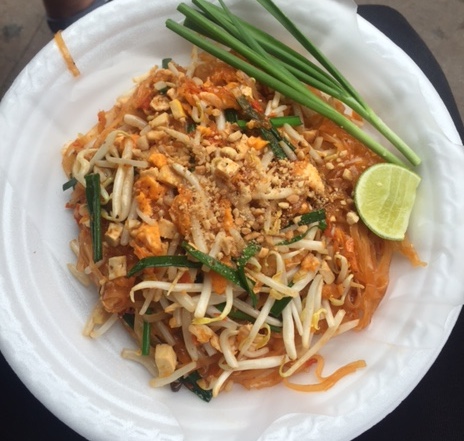
The biggest challenge for me was knowing what did and didn’t contain shellfish; for example, I got pad thai from a street vendor in Patong Beach. I ordered tofu pad thai which, in my mind, would be vegetarian and thereby have no chance of containing shrimp. I don’t have any semblance of Thai language skills so couldn’t have asked the vendor to avoid shellfish even if I had wanted to. When I got the pad thai,
I ate about half a dozen bites of deliciousness before I realized that there were small shri
p hidden in and amongst the noodles; I tried to pick them out but because of their size and abundance, I ultimately forewent eating the rest of the meal out of fear of getting sick.
As I mentioned, I did feel like I was able to get a thorough taste of Thai food and food culture while avoiding shellfish. I often ate fried rice, curry rice, noodle dishes that specifically advertised themselves as vegetarian, and of course no shortage of sweets – black sesame buns, coconut ice cream, mango sticky rice, Thai ice cream, green tea mochi, and every flavor of fruit smoothie. I ate food that I still have dreams about, even if those meals didn’t include shellfish.


Now this may totally kill my rapport with the vegetarians, but I have to admit that I ate meat in Thailand; I was previously a vegetarian for two years but was beginning to wean myself back into eating meat, knowing that my travels would be easier if I was eating it. I know, I know, I’m lazy and a sellout and the person I would judge for cheating for a burger. But my approach then (and continuing now) was to eat vegetarian whenever it was available, which was often, but when I knew my body needed protein and/or there weren’t any appealing veggie options, I could eat a small portion of meat without getting ill. For the most part, I stuck with a vegetarian diet; even if there were options of having meat in a dish (chicken fried rice vs. veggie fried rice), I would pick the veggie option. Many food stalls in markets offer meat so if you’re looking to avoid that, know that you’ll have to do some perusing before you find a good meal option or stick to smaller sides and snacks. Going back to my food anxieties, a lot of that for me lies with meat preparation and consumption so I wasn’t super keen about eating some of the meat anyway; not to say it isn’t delicious and probably 9 times out of 10 find to eat. My travel partner ate pork and chicken throughout the trip more often than I did but also didn’t get sick.
Actually…I need to be a little more transparent again. I spent one night of the two weeks in Thailand feeling sick. I’ll probably never know for sure what caused it, but I have my suspicions that it was cheese. Keep in mind that at this point in the trip, I was already dehydrated, sweating profusely every day, and trying to replace electrolytes with tablets that made my bottled water taste like lemony sweat; it could be that all of this contributed as much or as little as any dairy products.


This might be good news to the lactose intolerants out there: dairy is not a big part of a Thai diet. Sure, it’s in milk tea (duh) and ice cream and definitely in more Western dishes, but traditional Thai food isn’t smothered in cheese like so many other cultures’ foods (not that I’m complaining either way; I freaking love cheese but also thoroughly enjoy Thai food without it). So the point I’m making is that maybe there isn’t as much common knowledge about storing cheese and dairy products at appropriate temperatures or about their shelf life. My aforementioned partner and I shared a cheese pizza for dinner and both made mad dashes for the Pepto that night after being fine every day prior. From then on, we avoided cheesy dishes (lasagnas, cheeseburgers, and definitely pizza) and were careful about where we got milky drinks from. I’ll admit that if I wanted a “frou-frou” coffee drink that included milk, I would go to Starbucks, knowing that it was going to be similar and more regulated than a random roadside stand. However, I would drink regular tea/coffee without milk and/or bottled Thai tea, milk tea, etc. So the options are there!
This is where I’ll interject that you should not drink the water in Thailand. I know this can sound daunting, and I’m not trying to deter anyone from going or impart any unnecessary anxiety; I have an anxiety disorder and have specific anxiety about food preparation and food/water germs anyway, BUT I still went to Thailand and ate the food and didn’t get sick, okay? I just want to reinforce that if you’ve read it somewhere, it’s true. However, to their credit, the Thai people made it much easier for us to not get sick from the water by providing bottled water (in hotels and some hostels), by using bagged iced, and even cooking/preparing food and drinks with bottled water. I watched a woman at a local Thai market make my pineapple smoothie with bagged ice and bottled water so I knew that I could enjoy it without that lingering anxiety of “am I going to spend this night bowing to the porcelain gods?” Seriously, they seemingly go out of their way to help protect their Western tourists’ delicate stomachs from any water-borne illnesses. I was pleasantly surprised and very much appreciated this; like I said, I have a lot of anxiety about this but was able to relax a little and focus more on enjoying the amazing flavors of what I ate and drank there.
Speaking of things you can drink: beer in Thailand. Now Thailand isn’t exactly known for their beers, and as a fan of porters and stouts, I was admittedly a little underwhelmed by predominantly pilsners and lagers. 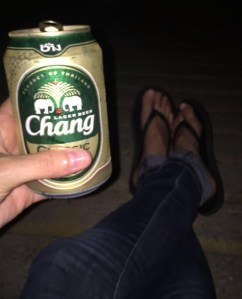 Think Coors Light or Bud Light. However, for a late-night walk on the beach or an accompaniment to some fried rice, Thai beers were refreshing and cheap. Of the Thai beers I drank, I liked Tiger the best and wasn’t all that fond of Chang (which was the only Thai beer I’d heard of before this trip). Personally, I didn’t drink often in Thailand because it was difficult enough for me to keep myself hydrated without it; however, there are plenty of bars in most of the towns so those looking to drink more certainly will be able to find places to do so.
If you’ve been to Thailand, what are some of the best things you ate and drank? And if you’re planning a trip, what are you excited to try? Let me know in the comments!
 Readventure Self